
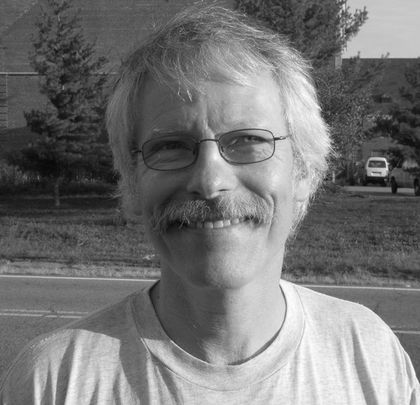
Photo: Dmadeo, CC BY-SA 3.0, Wikimedia Commons
Paul E. Olsen
Columbia University, Lamont-Doherty Earth Observatory
- Research field
- Palaeontology, cyclostratigraphy, and the lake beds of the Triassic and Jurassic
Paul Olsen reads the lake sediments of the Triassic and Jurassic. In 1986 he showed that the cycles of the Newark Basin have the thickness ratios of the orbital cycles, and with his colleagues he has since used seven kilometre-long drill cores from that basin and a core from the Colorado Plateau to measure the orbital cycles of 200 million years ago directly. The 405,000-year cycle set by Venus and Jupiter serves as the metronome, and the longer cycles that come from Mars and the Earth turn out to have been different from today's, which is what a chaotic Solar System predicts. The unit presents this work after its section on cyclostratigraphy.
In the masterclass
Section 6, after the cyclostratigraphy of the Newark Basin, shows how the orbital cycles of this unit are read from rocks 200 million years old and what they say about the planets.
The research is presented in Unit 14: Orbital Cycles and the Ice Ages, in a research spotlight box that explains the result at the level of the unit and links it to what you have just learned.